📄 Digital book in PDF · read it on your phone or print it
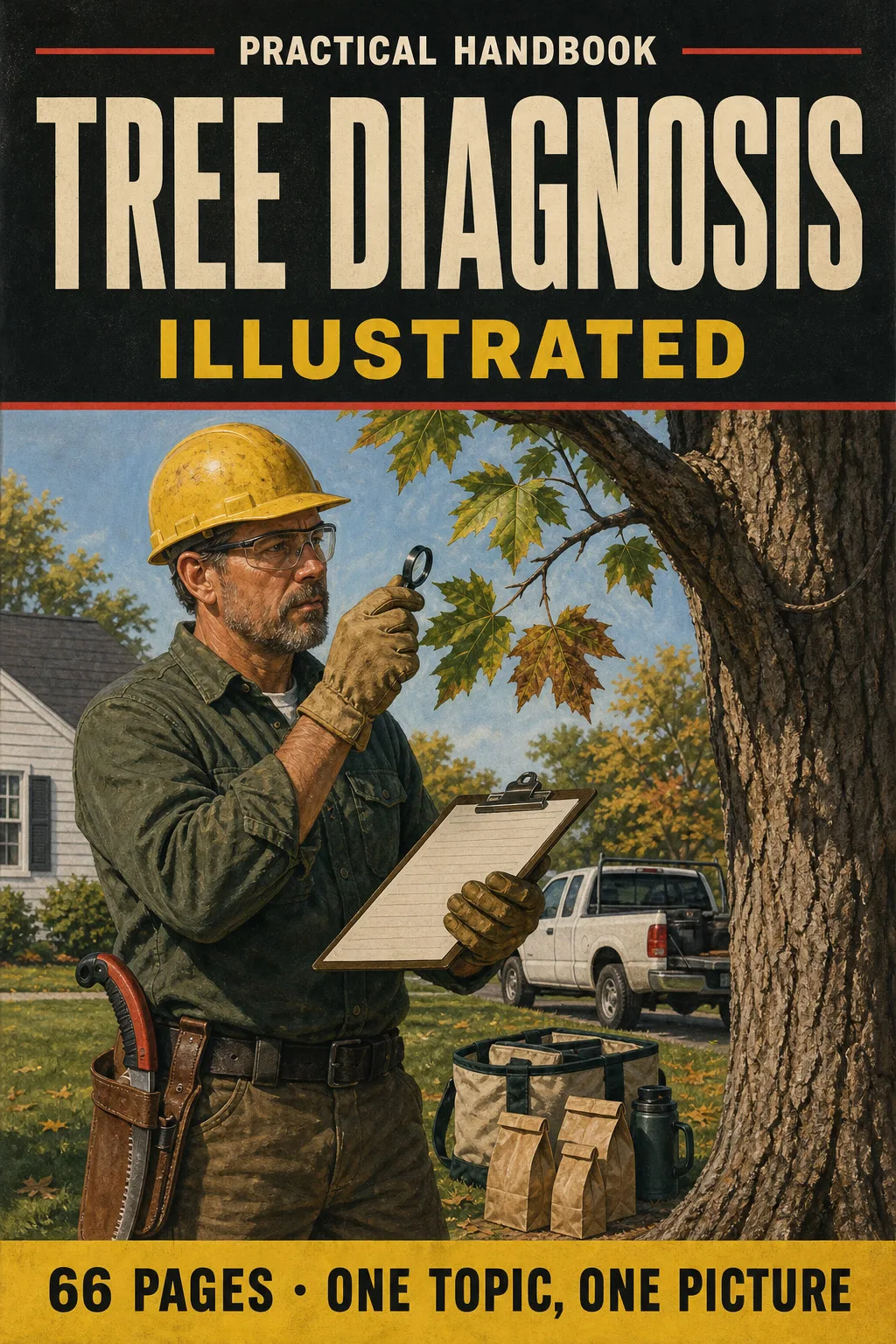
The same 6 steps every time: identify the host, read the site, read the pattern, check signs and symptoms, rule out look-alikes, confirm or send a sample. 66 pages: each topic drawn first, then what you need to remember. 66 illustrated pages.
🔒 Secure checkout · PDF by email · 30-day guarantee
Every page has one big drawing and a box with the signs, numbers and steps you need to know:


Swipe to see more →
These are real pages from the book. The table of contents is the full one: 9 parts and 62 topics.
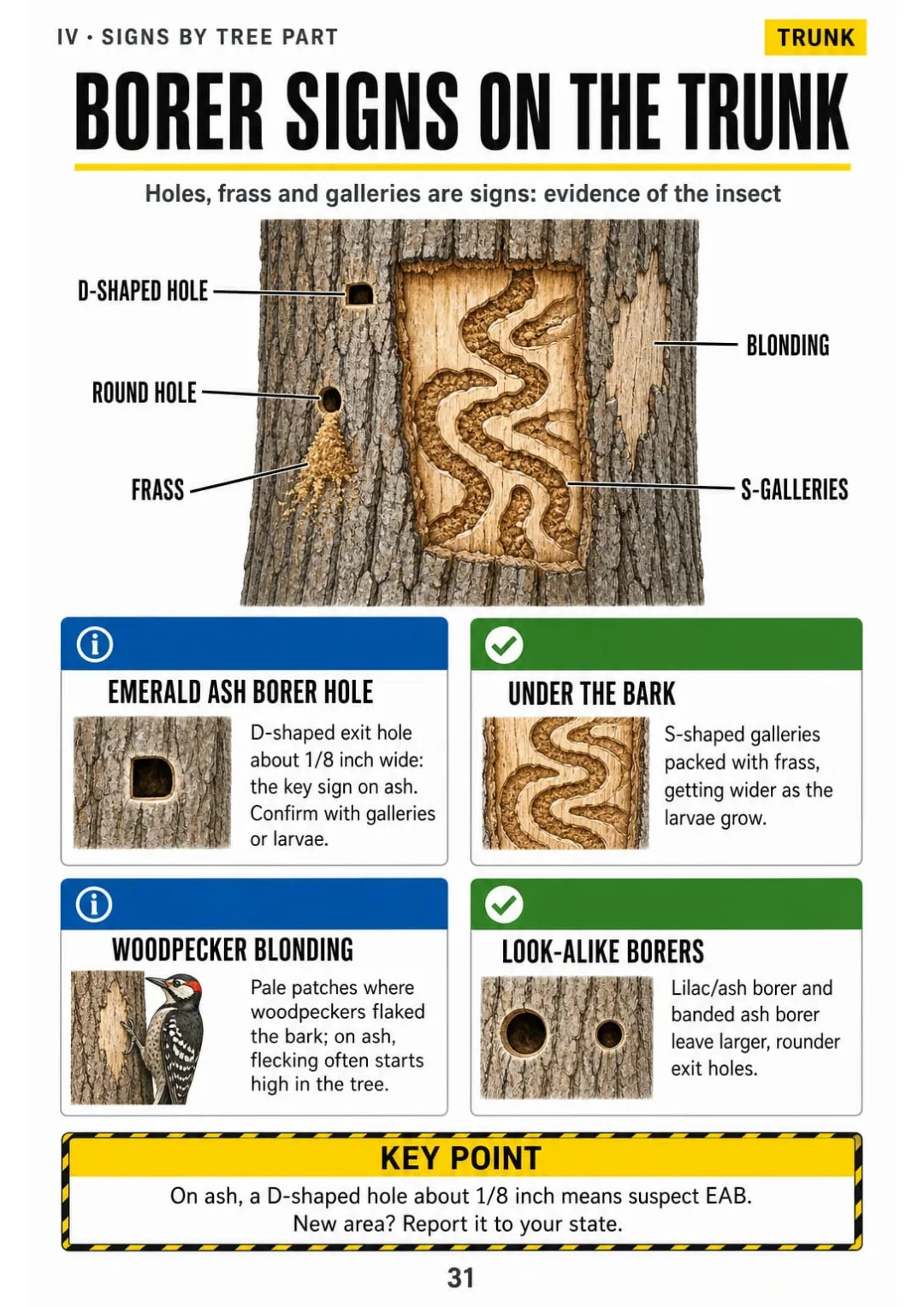
You're standing at an ash in a client's yard. The canopy is thin, there are pale patches on the bark, and they want to know right now if it's emerald ash borer.
The fact sheet covers exit holes, galleries and frass in long paragraphs. Reading about a D-shaped hole is not the same as spotting one on rough bark, ten feet up.

In the book, the trunk is drawn in cutaway: the D-shaped hole about 1/8 in, the S-shaped galleries packed with frass under the bark, and the pale blonding where woodpeckers have been feeding.
Cankers, vascular wilts, fungi at the root collar, girdling roots and sap-feeders get the same treatment: one page each, drawn the way they look on the tree.
Next time, you walk around the trunk, check for the hole, the galleries and the blonding, and tell the client what you see and why, with the book in the truck.

Why diagnosis needs an order, the host and the site, the pattern, signs and symptoms by tree part, the look-alikes, key US pests and diseases, samples and the lab, talking to the client, and practice: 66 pages, all illustrated
Think of it this way:
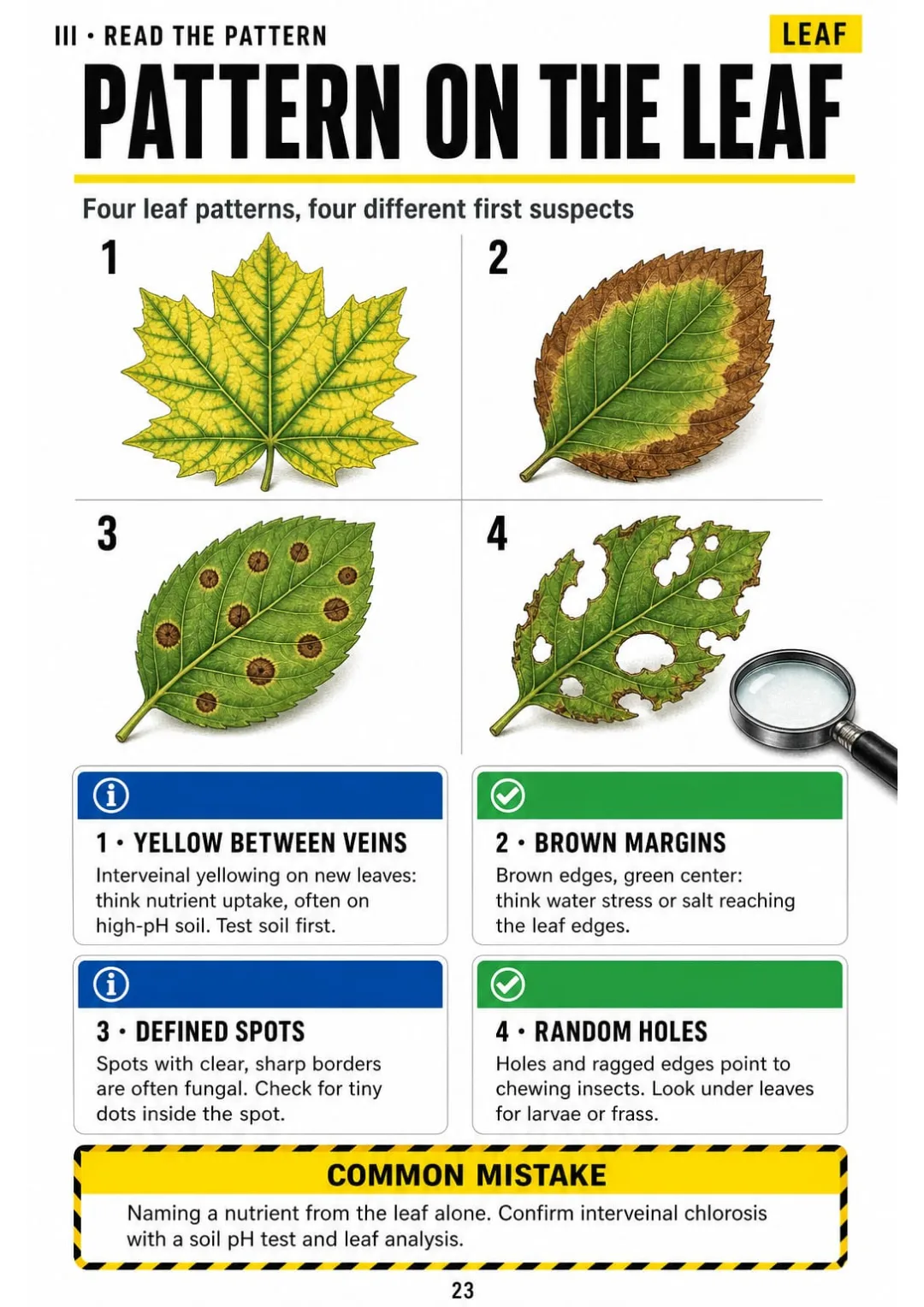
A town calls about a row of street maples. The leaf edges are brown and the trees closest to the road look the worst. You need to know if it's a disease or the salt truck before you say a word.
You open the book to the leaf pattern page and see four leaves drawn side by side: interveinal yellow, brown margins, defined spots and holes, each with what it usually points to.

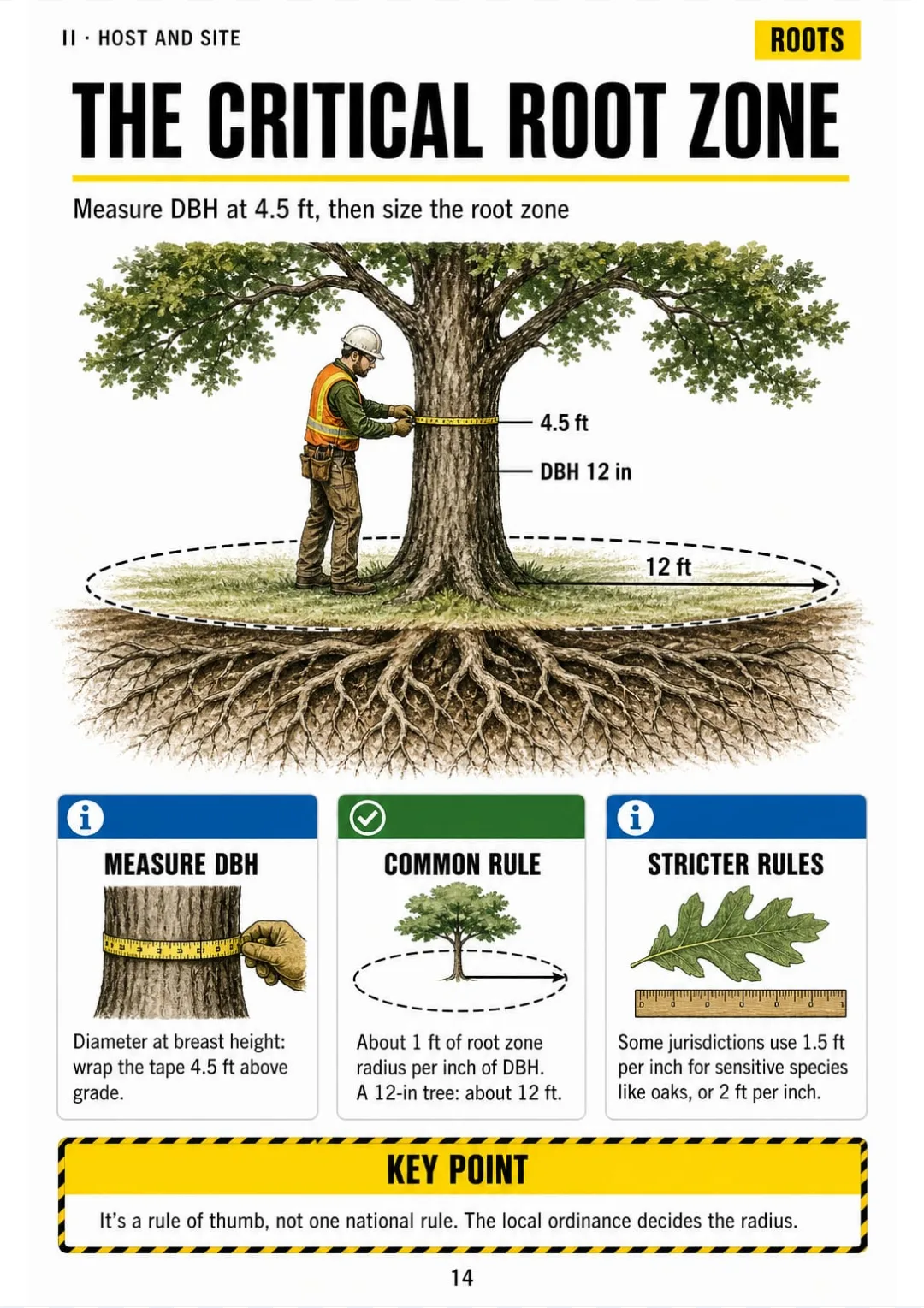
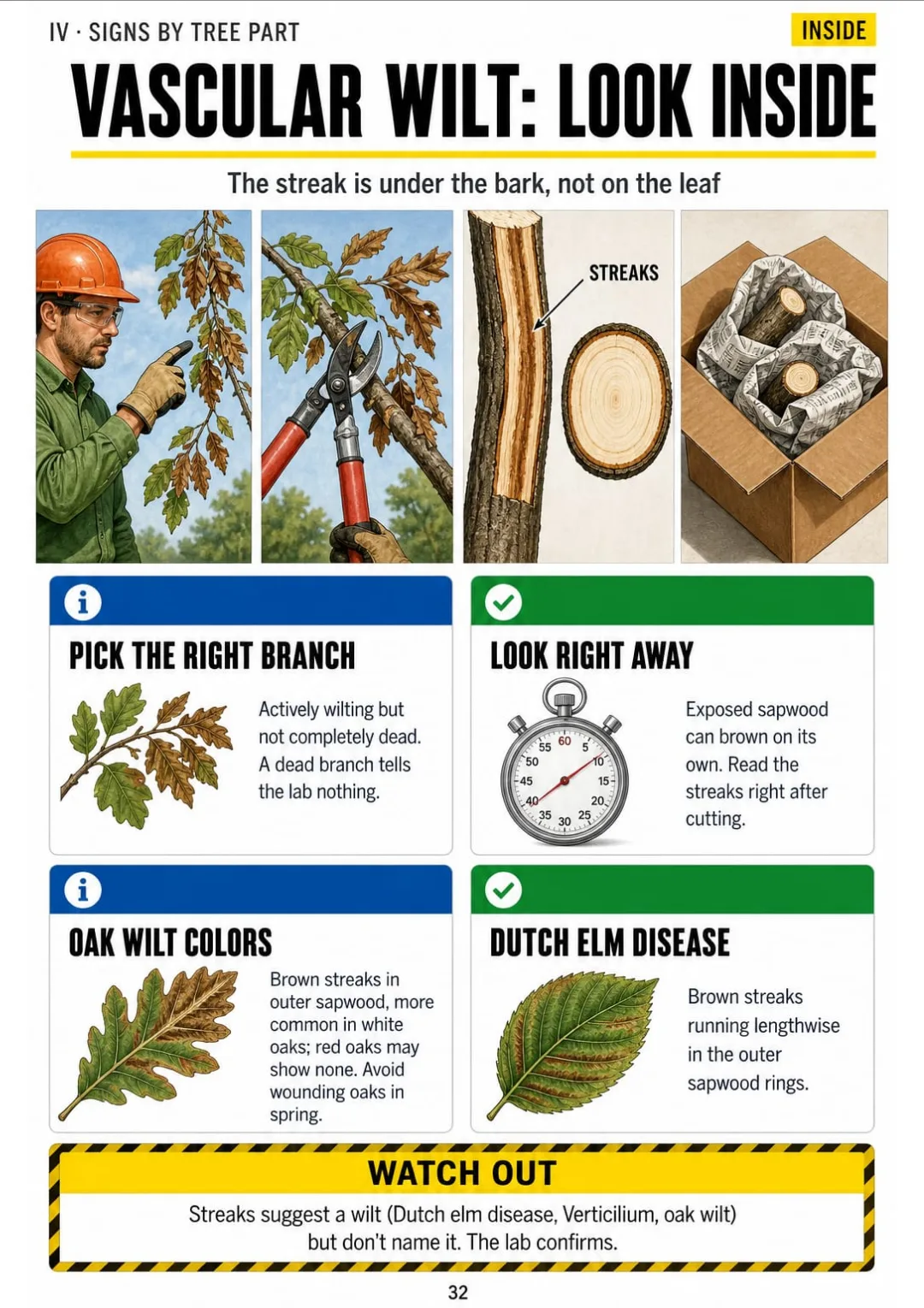
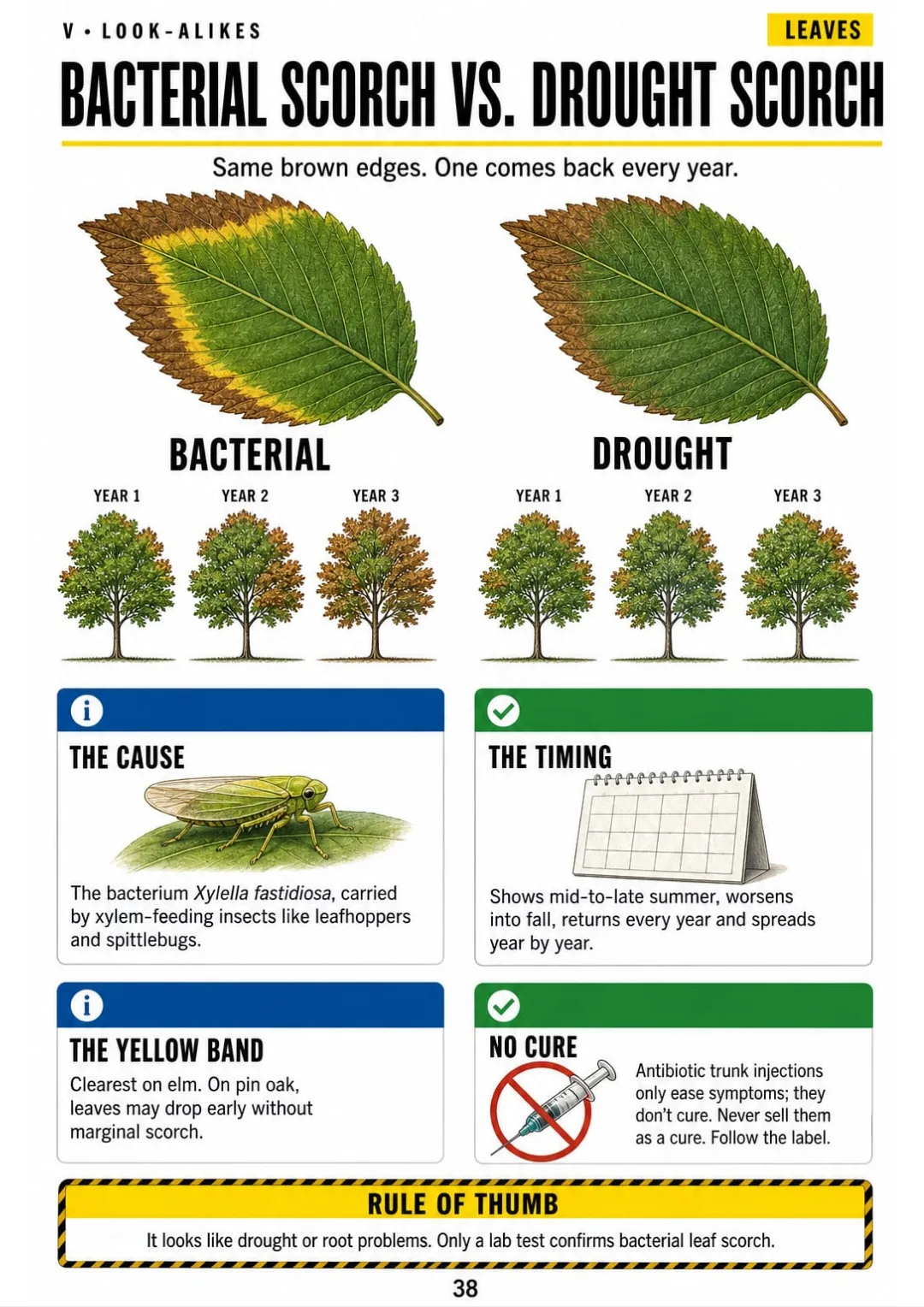
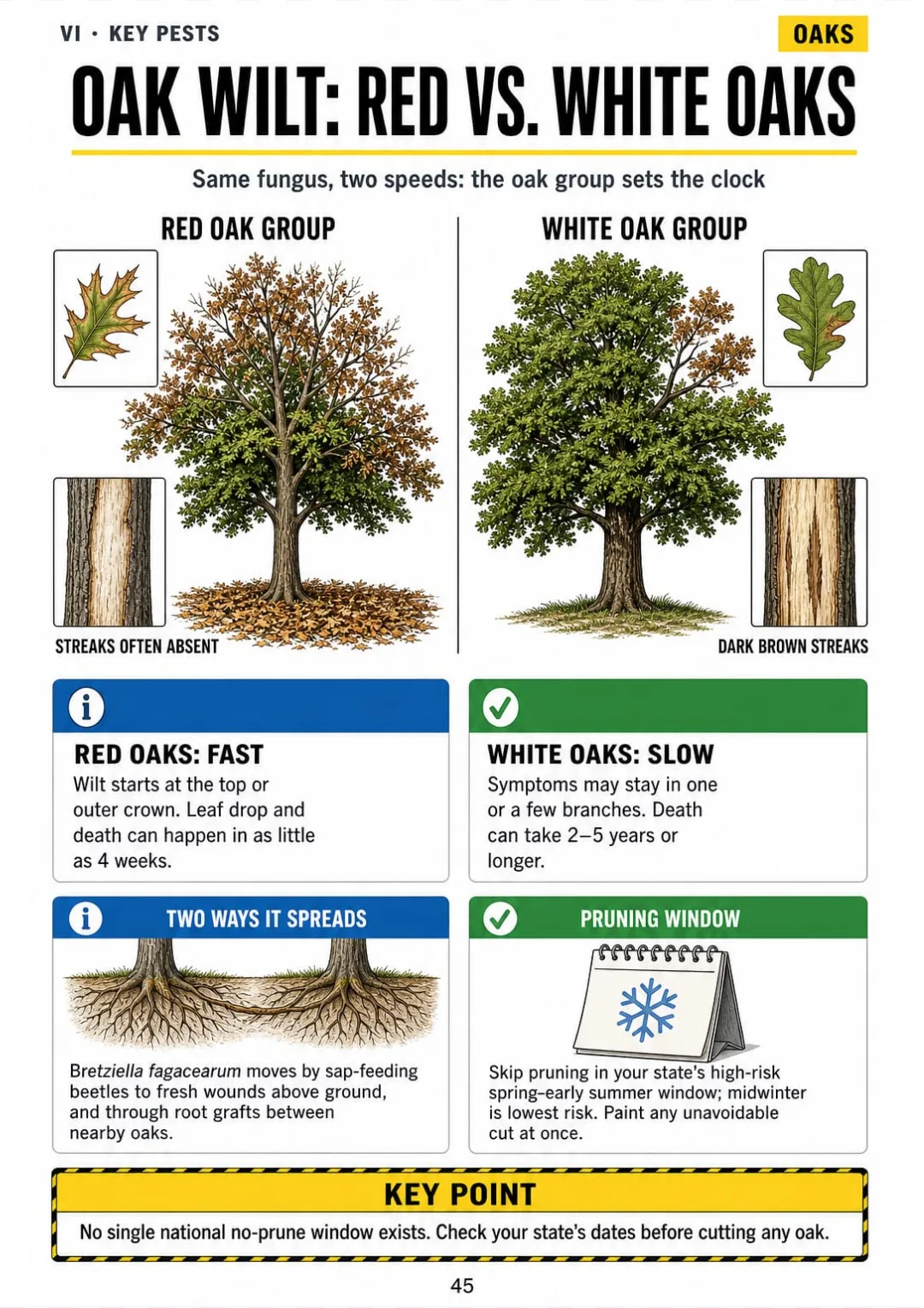
Same with the critical root zone, borer signs on ash, wilt streaks in the sapwood, bacterial scorch, and oak wilt in red vs. white oaks: each one has its own page.
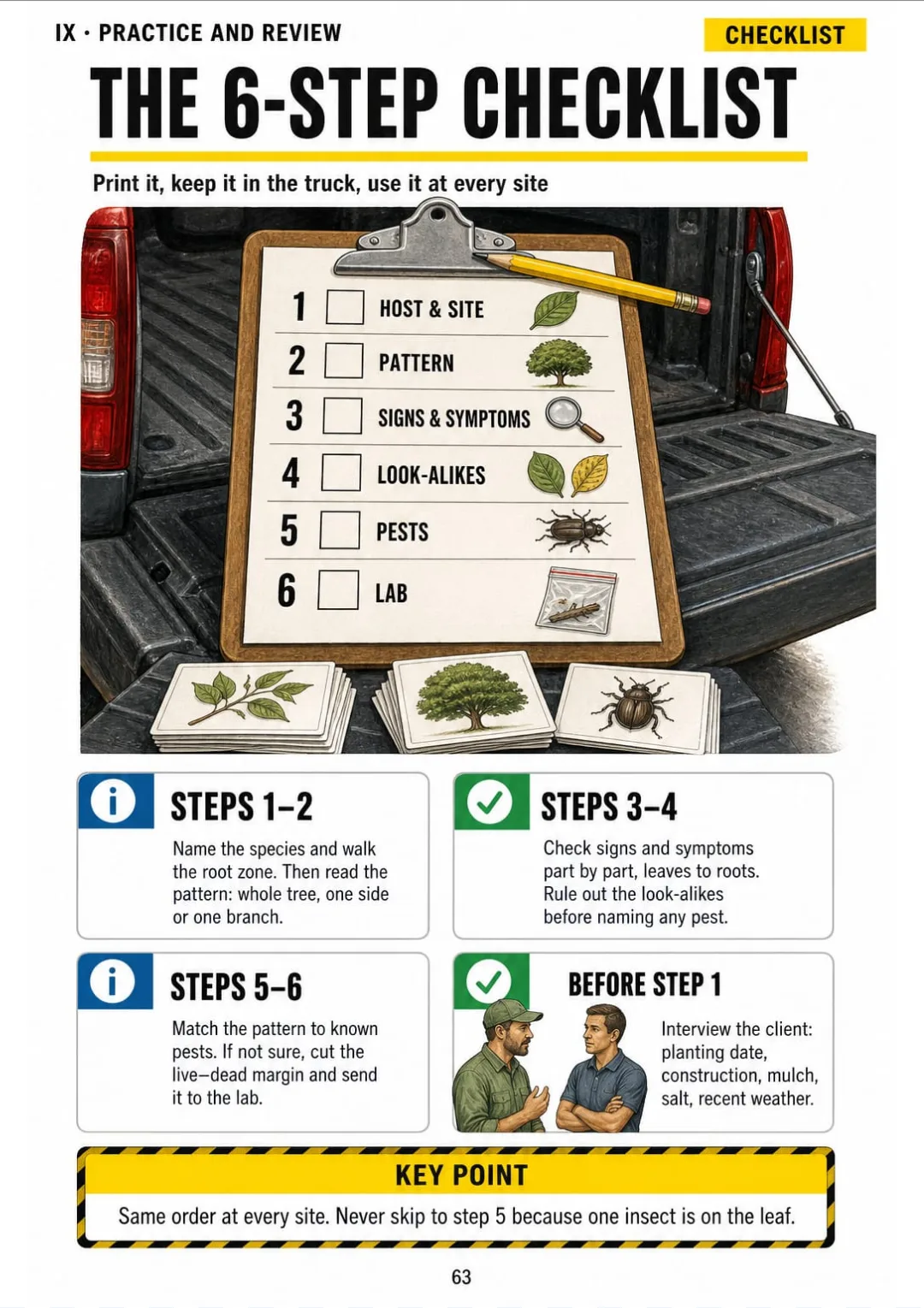
Tree Diagnosis Illustrated is 9 parts and 62 topics, all drawn, and it ends with a worked case on a declining red maple, the 6-step checklist and the look-alike pairs at a glance.
What you see drawn, you don't have to memorize.
One order for every tree, so you stop guessing: the 6 steps, signs vs. symptoms, biotic vs. abiotic, primary vs. secondary agents, the disease triangle and the questions to ask the client
Identifying the host, what normal looks like, the critical root zone, compaction, grade changes, planting depth and weather lag
Whole tree vs. one branch, top-down vs. bottom-up dieback, patterns across the site, in time and on the leaf, the road side and sharp edges
Leaf spots, curled leaves, needle browning, flagging, cankers, borer signs, vascular wilt, the root collar, girdling roots and sap-feeders
Drought vs. root rot, road salt vs. scorch, bacterial vs. drought scorch, herbicide injury, iron chlorosis, trimmer damage, volcano mulch and frost cracks
Emerald ash borer, oak wilt, Dutch elm disease, wood decay and conks, wet-site root rots, spring leaf diseases and invasive pests to report
When to send a sample, the live–dead margin, packing and shipping, photos for the lab, useful soil tests and reading the lab report
Confirmed, probable or ruled out, explaining it in three sentences, treatment questions and the label, and when to refer and monitor
A worked case on a declining red maple in two parts, the 6-step checklist, the most frequent mistakes, look-alike pairs and the field kit
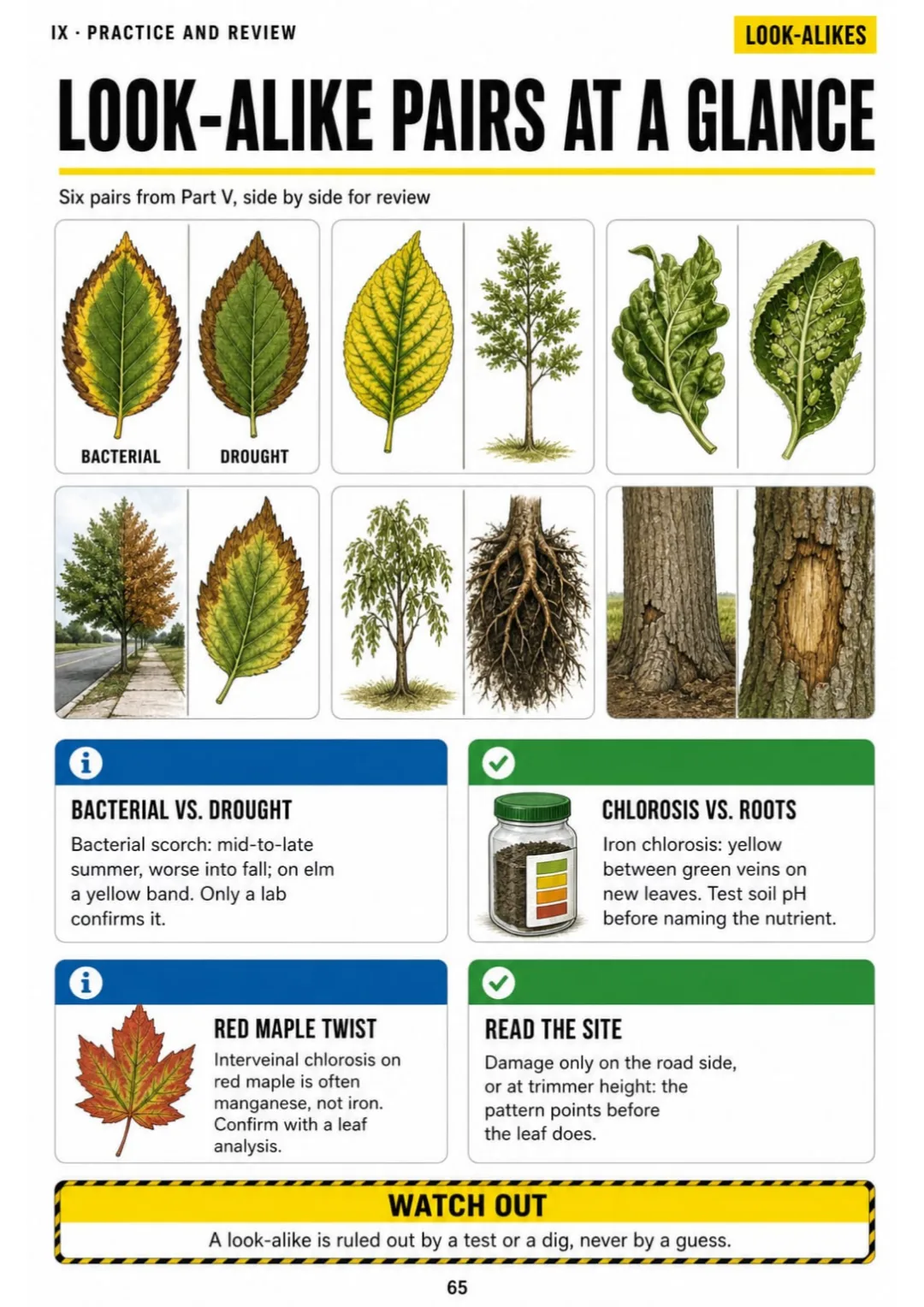
At the end of the book: A worked case on a declining red maple, the 6-step checklist on one page and the look-alike pairs at a glance.
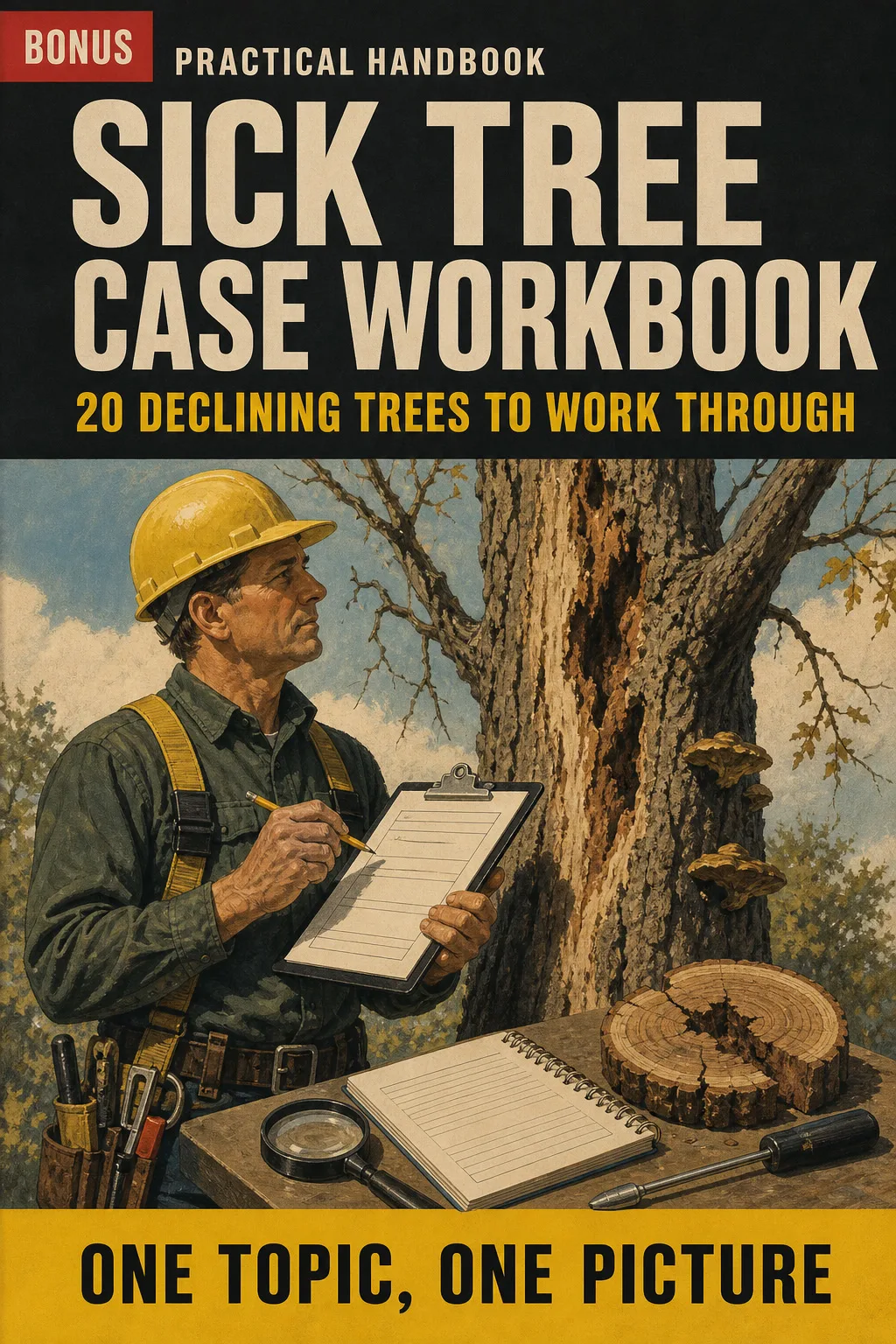
Practice the method on real-world style cases, from first look to conclusion, and check your reasoning against the worked answer.

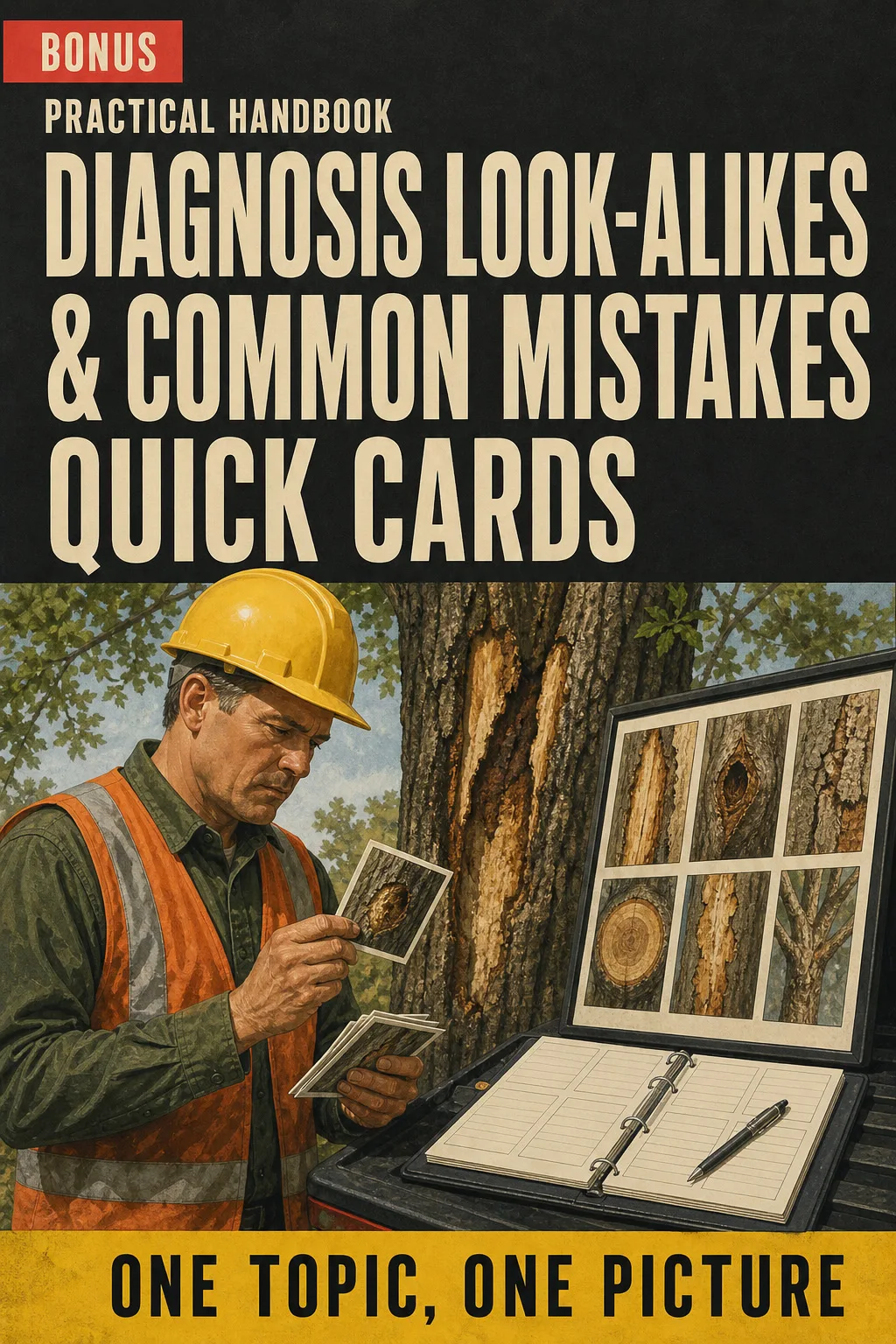
Keep the most frequent diagnosis mistakes and the look-alike pairs on one card each, to review in the truck before a site visit.
📄 This is a digital PDF book sent to your email: nothing is printed or shipped.
PDF by email: We email you Tree Diagnosis Illustrated as a PDF, together with the two free books. It's a single payment: no installments, no extra charges.
Years of pruning and removals behind you, and now clients ask what's wrong with the tree. The book gives you one order to look at it, step by step.
Go over the 6-step checklist and the look-alike pairs the night before, then keep the PDF printed in the truck.
When a row of street trees declines, you start with the pattern and the site, and you know when it's time to send a sample to the lab.
📄 This is a digital PDF book sent to your email: nothing is printed or shipped.
Try Tree Diagnosis Illustrated for 30 days, bonus books included.
We refund everything if the file won't open, if the book isn't what you see here, if you were charged twice or if the email doesn't arrive. Just email us.
You pay once. No subscriptions.
Yes. It assumes you know trees and saws, and gives you one order for looking at a sick tree: site, pattern, signs vs. symptoms, look-alikes and the lab. It's not a plant pathology textbook: trees and pests go by their common names, drawn the way you see them in the field.
It's written for US trees and pests, based on University Cooperative Extension guidance, state plant diagnostic labs, and USDA Forest Service and APHIS pest alerts. What changes by state (quarantines, lab requirements, pesticide rules) is marked on the page so you can check it with your state.
No. It's an independent illustrated book and isn't affiliated with any agency, university or association. It doesn't come with a certificate or continuing education credits.
No. It helps you work out what's going on before any treatment is on the table. For any product, it sends you to the label and your state's rules. It's study and field review material: it doesn't replace hands-on training, a lab diagnosis or your state Extension's advice.
The 6-step method works on any tree, anywhere: host, site, pattern, signs and symptoms, look-alikes, lab. The pest and disease pages focus on trees common in US yards and streets, like ash, maples, oaks and elms. For local pests and thresholds, the book tells you to check with your state Extension and plant diagnostic lab.
The book and the 2 bonus books come as a PDF by email, sent to the address you enter at checkout.
No. It's a one-time payment, with no subscription.
Yes. The PDF is made to print, so you can keep it in a binder in the truck.
You have 30 days. We refund everything if the file won't open, if the book isn't what you see on this page, if you were charged twice or if the email doesn't arrive: just email us.
No more rereading fact sheets that don't stick.
Borer holes, leaf patterns and wilt streaks: you see them drawn.
You get to the site knowing where everything is.
Drawings make studying faster.
The book is right below.
One-time payment: US$ 27 · Guarantee: 30 days · PDF by email
YES, I WANT TREE DIAGNOSIS ILLUSTRATED FOR US$ 27📄 This is a digital PDF book sent to your email: nothing is printed or shipped.